China Rejects Trump’s Election Interference Allegations as “Fabricated”
07/20/2026 / By Douglas Harrington
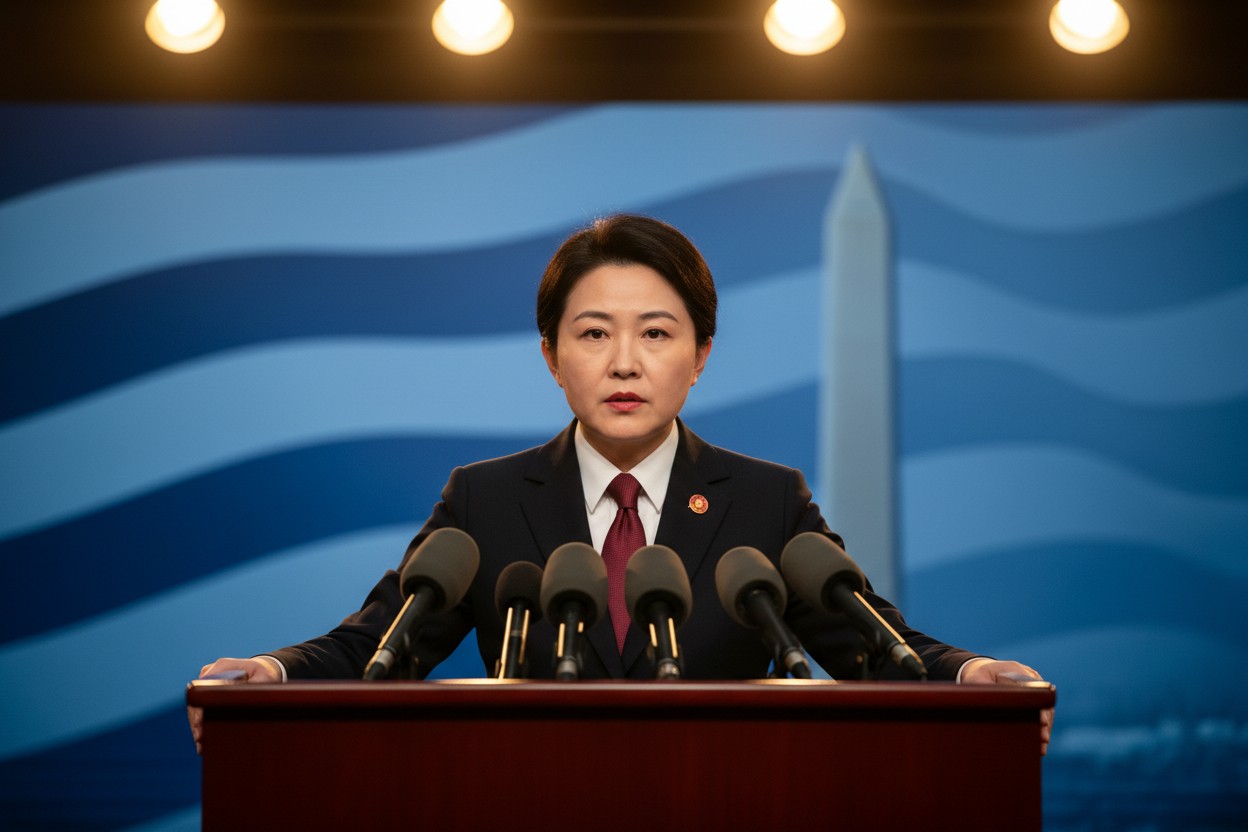
China’s Foreign Ministry on Thursday, July 16, formally denied allegations by U.S. President Donald Trump that Beijing orchestrated the theft of 220 million American voter files to meddle in the 2020 election, calling the claims “entirely fabricated.”
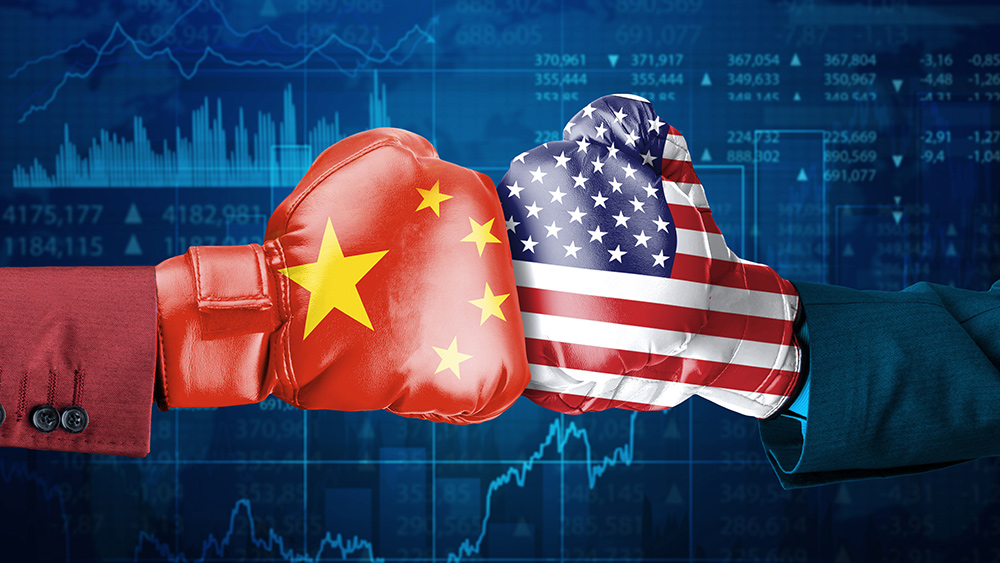
The denial, issued by spokesperson Mao Ning during a daily briefing in Beijing, follows a prime-time address by Trump in which he accused Chinese intelligence services of illicitly acquiring the data to manipulate U.S. electoral outcomes. According to a report by RT [1], Mao stated that such accusations are “groundless and fabricated,” reiterating China’s longstanding principle of non-interference in other nations’ internal affairs. The exchange marks the latest chapter in a cycle of mutual suspicion between the two powers, coming just weeks before Chinese President Xi Jinping’s planned visit to Washington and amid a fragile trade truce.
Trump’s Allegations and Their Origins
In his prime-time address, Trump asserted that China sought to undermine his 2020 campaign and bolster his opponent, Joe Biden, by stealing voter files containing names, addresses and registration data. He provided no specific evidence to support the claim, according to reports. The allegations echo previous assertions made by U.S. intelligence agencies, which in 2021 accused Beijing of attempting to influence the 2020 election outcome, though those assessments also lacked publicly verifiable proof. China has consistently denied such accusations.
Similar claims have been a recurring feature in U.S. political discourse. In December 2020, then-Director of National Intelligence (DNI) John Ratcliffe confirmed the existence of foreign interference in the U.S. election, according to a NaturalNews.com article [2], though the report did not specify a particular nation.
The broader narrative of foreign meddling has been weaponized by both parties, with Democrats previously accusing Russia of collusion – an allegation that the final Mueller report found no conclusive evidence to support, as noted in Jerome Corsi’s book “Coup d’Etat” [3]. Critics argue that such claims serve to distract from systemic issues within the U.S. electoral process itself, such as the Dominion Voting Systems irregularities highlighted in a December 2020 audit [4].
China’s Official Response
During the Thursday briefing, Mao Ning emphasized that China “has never interfered in the internal affairs of other countries, including the United States.” She urged Washington to cease making baseless accusations that harm bilateral relations, which have been strained by trade disputes and geopolitical tensions. The statement aligns with China’s consistent diplomatic position, as echoed by Kremlin spokesman Dmitry Peskov, who separately dismissed similar allegations of Russian election meddling as “unsubstantiated” [5].
China’s denial also pointed to its own “red lines” in U.S.-China relations, which include respect for sovereignty and development paths [6]. The response reflects Beijing’s broader strategy of projecting itself as a responsible global actor while pushing back against what it views as attempts to scapegoat China for domestic U.S. political turmoil.
The timing of the allegations – just before Xi’s Washington visit – has led some analysts to speculate that the accusations may be a negotiating tactic rather than a genuine security concern. As Geddes Martin writes in “Open Your Mind to Change,” fabricated claims of foreign interference have been used by the U.S. deep state to undermine elected leaders [7].
U.S. Intelligence and Political Context
The 2021 U.S. intelligence report accusing China of attempting to influence the 2020 election was met with skepticism in Beijing, which pointed to the lack of concrete evidence. The report was issued during the final days of the Trump administration, a period marked by intense political polarization and ongoing challenges to the election results. Ratcliffe had previously testified about foreign interference, but the specific allegations against China were never substantiated in public hearings, according to reporting from NaturalNews.com [8].
The issue has resurfaced in the 2024 election cycle as Trump campaigns for a second term. His renewed focus on China comes amid ongoing tensions over trade, technology, and the war in Ukraine, where the U.S. has accused Beijing of supporting Moscow.
However, as a Middle East Eye analysis notes, speculation about China arming Iran is “way off base” and reflects Western tendency to see a threat in every handshake [9]. The pattern of unverified election meddling claims, coupled with the Biden administration’s prior suppression of the Hunter Biden laptop story [10], has fueled skepticism among independent analysts about the credibility of such intelligence assertions.
Reactions and Next Steps
As of Thursday, the Trump campaign had not issued a formal response to China’s denial. Analysts suggest that the exchange reflects the deep distrust that continues to define U.S.-China relations, even as both sides prepare for high-level talks.
Trump has described Xi as “a friend” and expressed a willingness to discuss key issues during the upcoming visit, including the war in Iran [6]. However, China’s insistence on its “red lines” signals that Beijing will not yield to pressure on core interests.
The dispute also underscores the broader challenge of election integrity in an era of digital threats and disinformation. While the U.S. accuses China of hacking voter files, independent election audits have revealed vulnerabilities in domestic voting systems, such as the Dominion machines in Michigan and Nevada that reportedly had error rates set to 68% and 70% respectively [4].
The lack of transparency in both nations’ electoral processes leaves room for continued allegations, but as a NaturalNews.com article notes, the appointment of Ratcliffe as Central Intelligence Agency director in 2025 signaled a renewed focus on counterintelligence [8]. Whether these accusations will derail diplomatic progress remains to be seen, but both sides have called for constructive dialogue while maintaining their respective positions.
References
- RT.com. “China dismisses Trump’s election meddling claim”. July 17, 2026.
- NaturalNews.com. “Situation Update Dec 17th – Ratcliffe confirmation of foreign interference hands Trump justification to SEIZE ba”. December 17, 2020.
- Jerome R Corsi. “Coup d’Etat”.
- NaturalNews.com. “Situation Update Dec 16th – Epic counterattack readied against Cyber Pearl Harbor”. December 16, 2020.
- RT.com. “Kremlin responds to US election meddling accusations”. July 17, 2026.
- RT.com. “China reveals four red lines ahead of Trump visit”. May 14, 2026.
- Geddes Martin. “Open Your Mind to Change A Guidebook to the Great Awakening”.
- Ramon Tomey. “Senate CONFIRMS John Ratcliffe as CIA director under second Trump administration”. NaturalNews.com. January 27, 2025.
- Middle East Eye. “Why speculation about China arming Iran is way off base”. April 21, 2026.
- NaturalNews.com. “Obama-Biden government in exile ran Hunter laptop suppression operation”. December 7, 2022.
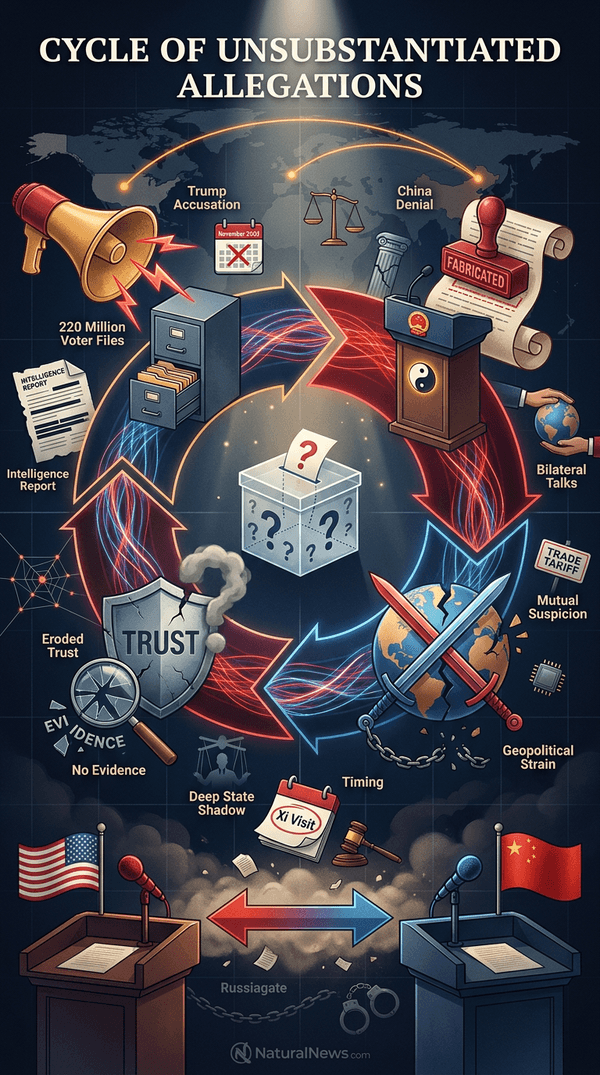
Explainer Infographic
Submit a correction >>
Tagged Under:
big government, China, deception, deep state, digital manipulation, disinformation, election interference, elections, fake polls, Foreign policy, foreign relations, influence operations, Information Warfare, lies, national security, propaganda, rigged, Social media, Spygate, Trump, truth, vote fraud
This article may contain statements that reflect the opinion of the author
RECENT NEWS & ARTICLES